
Stories are meant to be told by humans to humans.

Our contacts
| Crafted by the Humans of Humanize |
Launched in March 2024 |


Written by: Ehsas Darak
One of the core ideas behind Humanize has always been humanizing workplaces. Not as a slogan. Not as a trend. And definitely not as a line that sounds good on a website.
But as a genuine question: what if workplaces were built differently?
What if people did not have to leave parts of themselves at the door when they logged in every morning? What if trust came before control? What if empathy was not reserved for exceptional situations but became a part of the everyday experience of working together?
These are questions Humanize has been thinking about long before it existed.
Today, I'd like to pull the curtain back a little and show you what that looks like inside our own house. And why humanizing workplaces matters so much to us.
Hi, I am Ehsas, a human of Humanize, and this is what our culture feels like from the inside.
A few weeks ago, Humanizers across the span of three years came together in Hyderabad for the Humanize reunion. We called them a day before, and each of them showed up :)
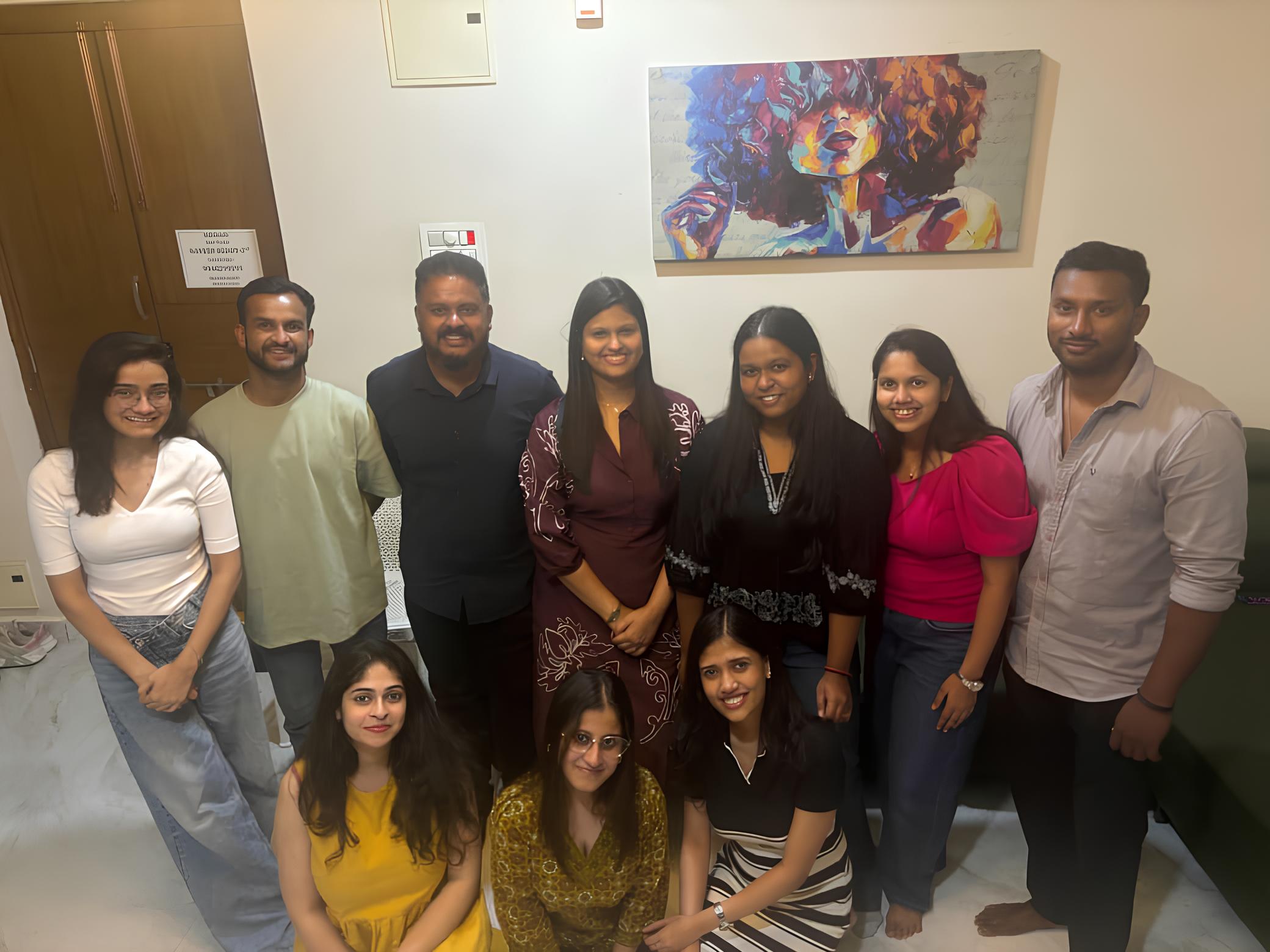
Some of us currently work here. Some have moved on to different organizations. Some joined as interns, and some of us came later. Our journeys have been different, our timelines have been different, and in many ways, our lives today look very different too.
As we sat together sharing stories about how we joined Humanize and where life had taken us since, I found myself noticing how different everybody was. Different personalities, different ambitions, different paths. And yet, there was something familiar about all of us. Something difficult to explain, but easy to feel.
One of the moments that stayed with me from that reunion was when one of the earliest members of Humanize shared her journey. She spoke about her time here, what it meant to her, and how even after moving on, a part of her still carries Humanize with her.
By the end of it, there were tears in the room. Happy, emotional tears. The kind that surprises you because they arrive before you have fully understood why you are feeling them.
What struck me most was that some of us had met her only hours earlier, and yet we all felt connected to her story. Connected enough to celebrate it. Connected enough to feel emotional about it.
I remember thinking about how interesting that was. Because on paper, we were all different people with different experiences of Humanize. And yet, somehow, there was still something common among all of us.
That is when I found myself thinking about something I have noticed repeatedly during my time here. There is a thread that seems to run through all of us. I like to call it the “humanized thread”.
It is difficult to define because it is not one thing. It is not a process or a framework. It is not even a cultural value written on a document.
It is a way of showing up. It is visible in the way people listen to each other. In the way they ask questions. In the way they celebrate each other's wins. In the way they make space for difficult conversations.
And perhaps the first place where you encounter it is through something we call the “Emotional Agreement”.
Like every organization, Humanize has its onboarding documents, but alongside them sits something a little different. The Emotional Agreement is a collection of promises we make to one another. Not expectations. Not rules. Promises.
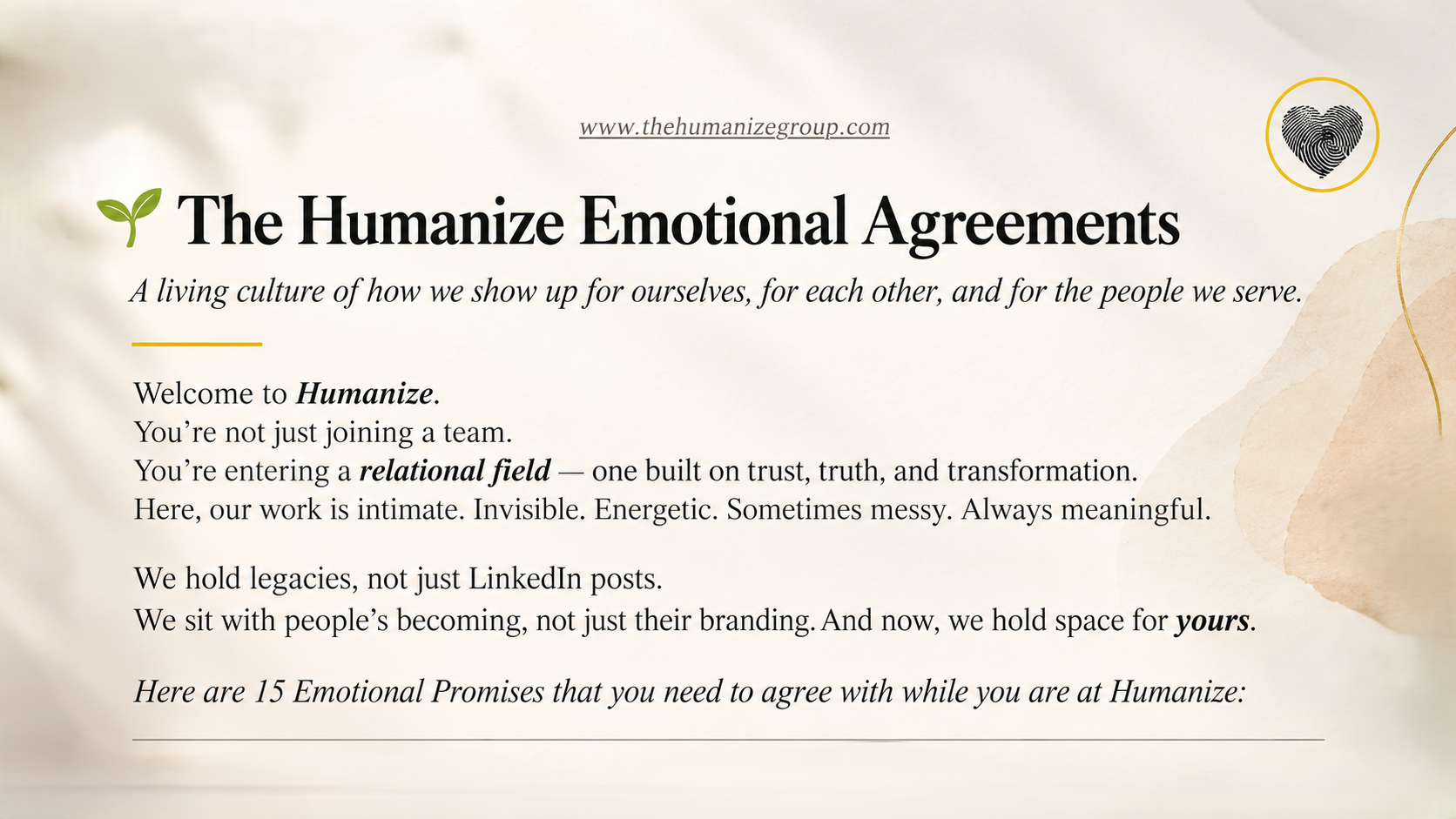
At its heart is a simple idea: this should be a place where people feel safe enough to be human.
A place where you can bring all of yourself, not just the version that fits neatly into a job description.
A place where we leave room for not knowing.
You do not need to have the quickest answer in the room. You do not need to speak with certainty about everything. "I don't know yet" is a valid place to be.
It also means we do not edit the human out. Whether it is a conversation, a piece of writing, or a client interaction, we do not believe professionalism requires people to become less human.
In my experience, it is quite the opposite. The more honest and self-aware we are, the better our work tends to be.
And it means empathy is not an occasional practice. It is part of the culture. It is in our everyday behaviour. It shapes the way we give feedback, ask for help, collaborate, and communicate.
As I write this, it has been over a year since I joined Humanize.
And one thing I have learned is that people here see you beyond your role. Beyond your designation. Beyond your skill set.
You are encouraged to bring your strengths, of course. But you are also allowed to bring your uncertainties, your questions, your learning curves, and your evolving self.
I could write about how fun Humanize is (because it is). I could write about the laughter, the inside jokes, the random conversations, and the moments that make work enjoyable.
But I think the deeper truth is that the default setting here is trust. Empathy is a default too.
We do not spend our energy assuming that people need to be monitored. We begin with the belief that people want to do good work. That they care. That they are trying. Which means we spend less time proving trustworthiness and more time building trust.
We do not call Humanize a "family" necessarily; we often describe it as a professional sports team.
Each of us brings different strengths, perspectives, and experiences, but there is a shared commitment to helping one another grow.
Over time, I have realised that people here have a way of seeing potential in you before you can see it yourself. They trust you with responsibility, encourage you to take on challenges, and support you as you grow into them.
There is a genuine investment in each other's growth here. You celebrate each other's wins, learn from each other's experiences, and move forward together. The belief is simple: when one person grows, the team grows with them.
This is the part that surprises most Humanizers.
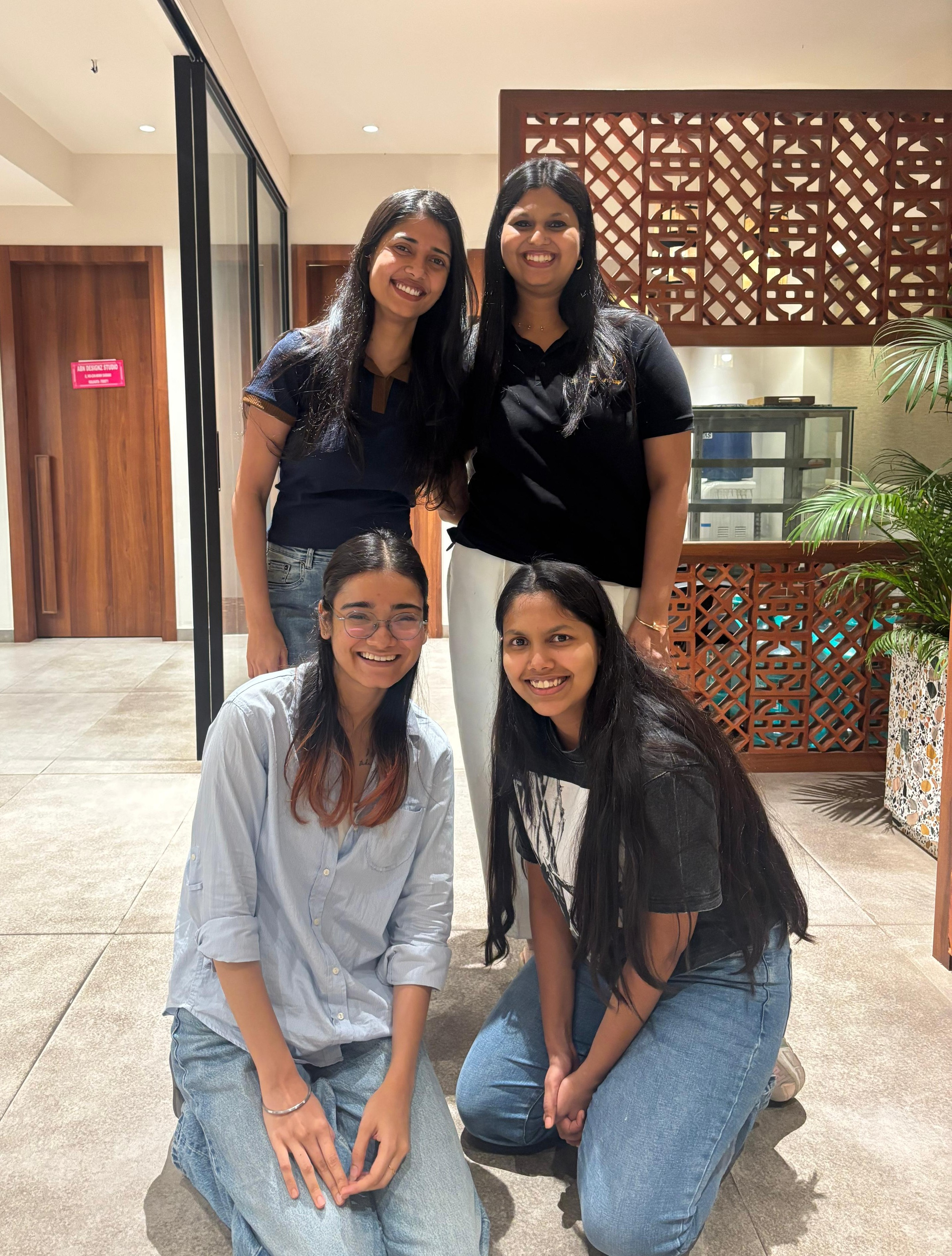
When you first join, "keeping the human at the centre" feels like a value. It is something you read during onboarding, something you agree with, and something you admire. But after a while, you realise it has quietly become part of how you think.
It starts showing up in small ways. In the way you approach conversations. In the way you write. In the way you give feedback. In the way you collaborate with your team. What once felt like an idea gradually becomes a way of operating.
And then one day, you find yourself on a call with a client, talking about culture, leadership, communication, or people. You find yourself helping someone rethink how work can feel for the people around them. Somewhere in that conversation, you realise that you are no longer repeating a philosophy you learned. You are speaking from experience. You are speaking from something you have lived.
That, perhaps, is the most beautiful part of all this.
Humanizing workplaces is not something we only advocate for externally. It is something we try to practice internally, every single day.
Because culture is rarely built through mission statements alone. It is built through everyday interactions. Through how people are treated when they succeed. Through how people are treated when they struggle. Through what happens on ordinary Tuesdays when nobody is watching.
The idea of #HumanizingWorkplaces began with our founder, Archita, imagining what workplaces could look like if people were truly placed at the centre.
What continues to inspire us is watching that idea travel through current Humanizers, former Humanizers, clients, conversations, and countless small actions that may never make headlines but leave a lasting impact on the people experiencing them.
And perhaps that is what an ideal workplace really is. It does not have to be a perfect place, but a place where people are trusted, cared for, and able to do meaningful work without having to leave their humanity behind.
If you are reading this, whether as someone who wants to join us someday or simply as someone wondering whether workplaces like this can exist, I hope this offers an answer.
We haven’t figured everything out, but we have seen firsthand what becomes possible when people choose to build work around humans rather than asking humans to build themselves around work.
